An informal photo dump and some thoughts on French building elements, establishments, food and people.
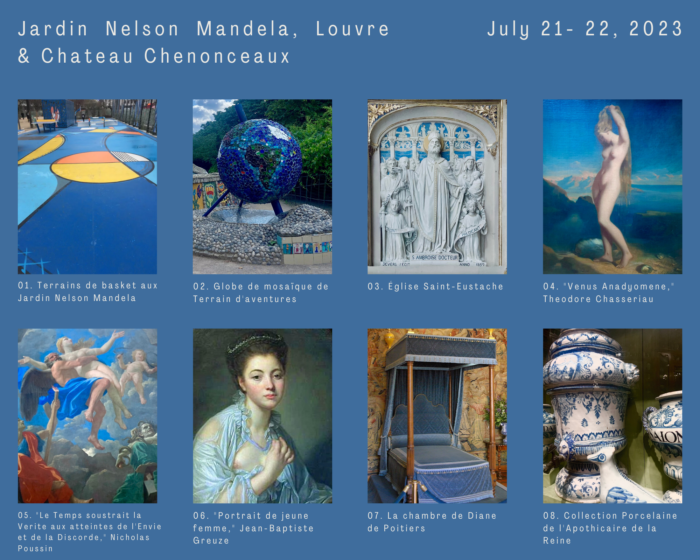
01., Jardin Nelson Mandela
At the heart of the Les Halles district, the Jardin Nelson Mandela offers stunning views of the Saint Eustache Church and iconic Canopy of the Forum des Halles. The garden is located in the first arrondissement of Paris and the Châtelet-Les Halles station (where three RER lines converge, making it one of the most important transportation hubs in the Île-de-France region).
Before its transformation, Les Halles (nicknamed the “stomach of the city”) was Paris’ central fresh food market before it was demolished in 1973. The space, as we see it today, was designed by the architect Louis Arretche in 1986 and opened to the public in 1988 as Jardin Des Halles. Following the death of Nelson Mandela in December of 2013, the mayor of Paris, Bertrand Delanoë, put forth a proposal renaming the space: “Nelson-Mandela Garden.” The proposal was accepted and the plaque formalizing the name was unveiled within the same month.
A fundamental concern for others in our individual and community lives would go a long way in making the world the better place we so passionately dreamt of.
— Nelson Mandela
The garden itself has many sculptures, a sundial, tropical greenhouses and a large, well-equipped playground. The play areas have an interesting origin: a petition launched by middle school students from the first and second arrondissements.
Needing space to have fun, they challenged city officials to find a solution to their lack of green space. The City of Paris, moved by these students’ request, decided to dedicate a large portion of the garden to a free and accessible multi-sports ground. After two years of design and construction, the playground was born. The infrastructure was created with the goal of allowing students to indulge with complete freedom.
The new football field, two basketball half-courts, two ping-pong tables and two chess tables were all decorated by the street artist Romain Froquet. Inspired by ethnic art and urban aesthetics, the Froquet wanted to recreate a “piece of heaven” with the giant fresco on the flamboyant blue floor you see pictured above. The other colors, such as yellow or orange, stand out and provide a warmer appearance and had a hand in the selection of the colors.
I like the idea that art integrates the urban landscape. This is not only for aesthetic reasons but also to create a social and community bond. I find myself, completely, in the artistic approach of the Mexican muralists, Diego Rivera, José Clemente Orozco or David Alfaro Siqueiros who wanted to make their works accessible to the public.
— Romain Froquet